
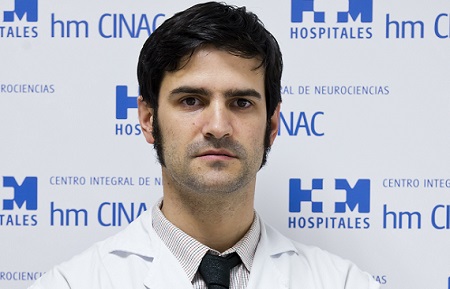
This week, the ELLIS Madrid Unit continues its research seminar series with a talk by Dr. Ignacio Obeso, from the Cajal Neuroscience Centre (CSIC). The seminar, titled “Organized and Motivated Behaviour in Dopaminergic States”, will take place on Thursday, January 15, from 12:00 to 13:00, in Room 4.2.E03 (Torres Quevedo Building at Universidad Carlos III de Madrid).
Abstract: Organized cognition relies on daily habits to shape our behaviours. This is accomplished by a refined combination of cognitive control, expected rewards, stimulus-response associations and action selection in stable scenarios. The ability to select the best possible movement, thoughts or emotions largely relies on fast and anatomically precise subdivisions along the cortico-striatal and hippocampal networks. Yet, little is known about how controlling and learning systems interact to reach organized and habitual behaviours, their underlying neural substrates and when they fail in certain pathologies. During my talk, I will provide evidence on how cognitive control and habits motivate behavior in an organized manner and when emotional impact interferes with such patterns. I will present a series of behavioural, big data and neuroimaging experiments where everyday life and experimental measures are combined in both healthy and disease conditions. Using behavioural paradigms, neuroimaging, brain stimulation, real-life measures and patients, my talk will combine concepts of habit and control of organized behaviour with putative altered mechanisms in some neuropsychiatric conditions, were loss of control over particular reward cues is manifest.
Dr. Obeso is a cognitive neuroscientist whose work focuses on understanding how cognitive control and habitual processes interact to shape organized behaviour. His research spans healthy populations and clinical conditions, combining behavioural experiments, neuroimaging, neuromodulation, and real-life data to uncover how the brain selects actions, regulates impulses, and adapts to changing environments.
After completing his PhD at University College London, Dr. Obeso held postdoctoral positions at the University of Toronto and CNRS in France, where he investigated the neural circuitry underlying cognitive control and decision-making, including their disruption in neuropsychiatric disorders. In 2019, he founded the Cognitive Control and Habit Laboratory, now based at the Cajal Neuroscience Centre, where his team studies the neural and computational mechanisms that support adaptive and goal-directed behaviour.
This seminar offers an excellent opportunity to learn more about current advances in cognitive neuroscience and their relevance for understanding both normal and disordered behaviour. We look forward to welcoming attendees from across disciplines to this event organized by the ELLIS Madrid Unit.